
Supply chain challenges that started with pandemic lockdowns haven’t disappeared; they’ve evolved. Many industries are still dealing with constrained supply, unpredictable lead times, and ongoing backorders. For distributors, that means the real question isn’t just “when will product arrive?” but “how do we make the best use of the inventory we do have?” In the sections below, we’ll look at practical ways to manage inventory and allocation so you can reduce backorders, protect key relationships, and keep more orders moving.
The Problem
Most commonly, orders are filled on a first-come, first-served basis. This seems fair. But what if that first order is for 500 pieces and the next 19 orders are for only five? If you only get 100 pieces of stock in a week, the customer second in line will be waiting over a month to get their order filled, even though you’re getting stock weekly. But if you break up each order and give every customer five pieces each week, you can fulfill the majority of your orders almost immediately, avoiding long backorder lines and reducing wait times, leading to more fulfillments and happier customers.
Perhaps before the supply chain disruptions, you had specific companies that were deemed at a higher priority due to their buy and sell structure. How does this impact overall inventory management?
- With backorder lists, having a higher priority allows a company to jump the line
- Having limited inventory means orders are constantly being sent out to only one customer
- As a result, the wait time for everyone else continues to grow.
- Orders begin to time out and are canceled, creating lost opportunities for you.
While certain parameters, or a lack thereof, may have worked before the supply chain restraints, they likely need to be updated as supply and demand continue to be a struggle for many companies.
The Solution
Enter the Fulfillment Management Business Process Module in JD Edwards EnterpriseOne.
Instead of sales orders triggering pick slips, Fulfillment Management runs the order through a scoring system based on rules set up by the administrator. Rules can be created based on a general scoring system or through advanced preferences, which will then determine the weight of each order. Users can build rules around product inventory, customer priority, and/or shipping information. Once in place, the Fulfillment Management module will recommend order fulfillments based on the rules. A review and approval process screen is available to allow for the reallocation of the recommendations to handle specific circumstances.
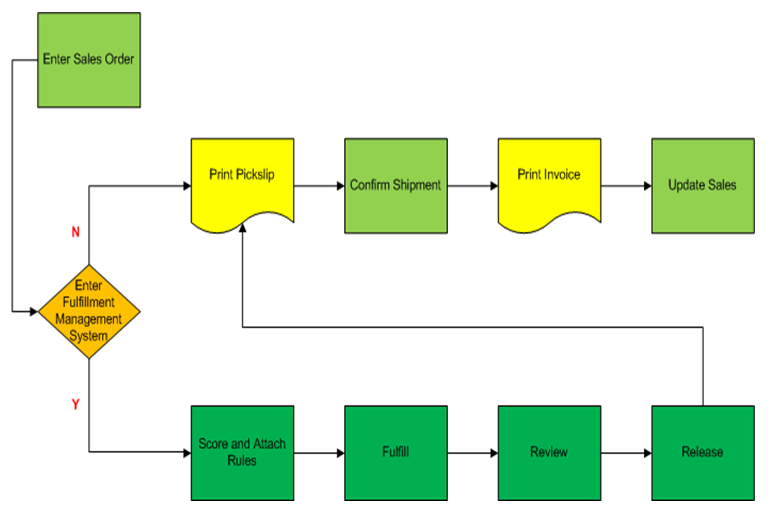
By redefining the inventory distribution and allocation process, JD Edwards EnterpriseOne Fulfillment Management reduces backorders that occur due to inventory availability, allowing more orders to be fulfilled and reducing order cancellations due to backorder restrictions.
It’s important to note that Fulfillment Management is a separately licensed module for JDE E1, but its advanced capabilities offer significant value, especially amid a global supply chain disruption. Additionally, it should be noted that this module is only available for JDE EnterpriseOne, and specifically, no equivalent feature is available in JDE World.
Interested in seeing how it’s done? Contact us for more information.